

Fear of Movement
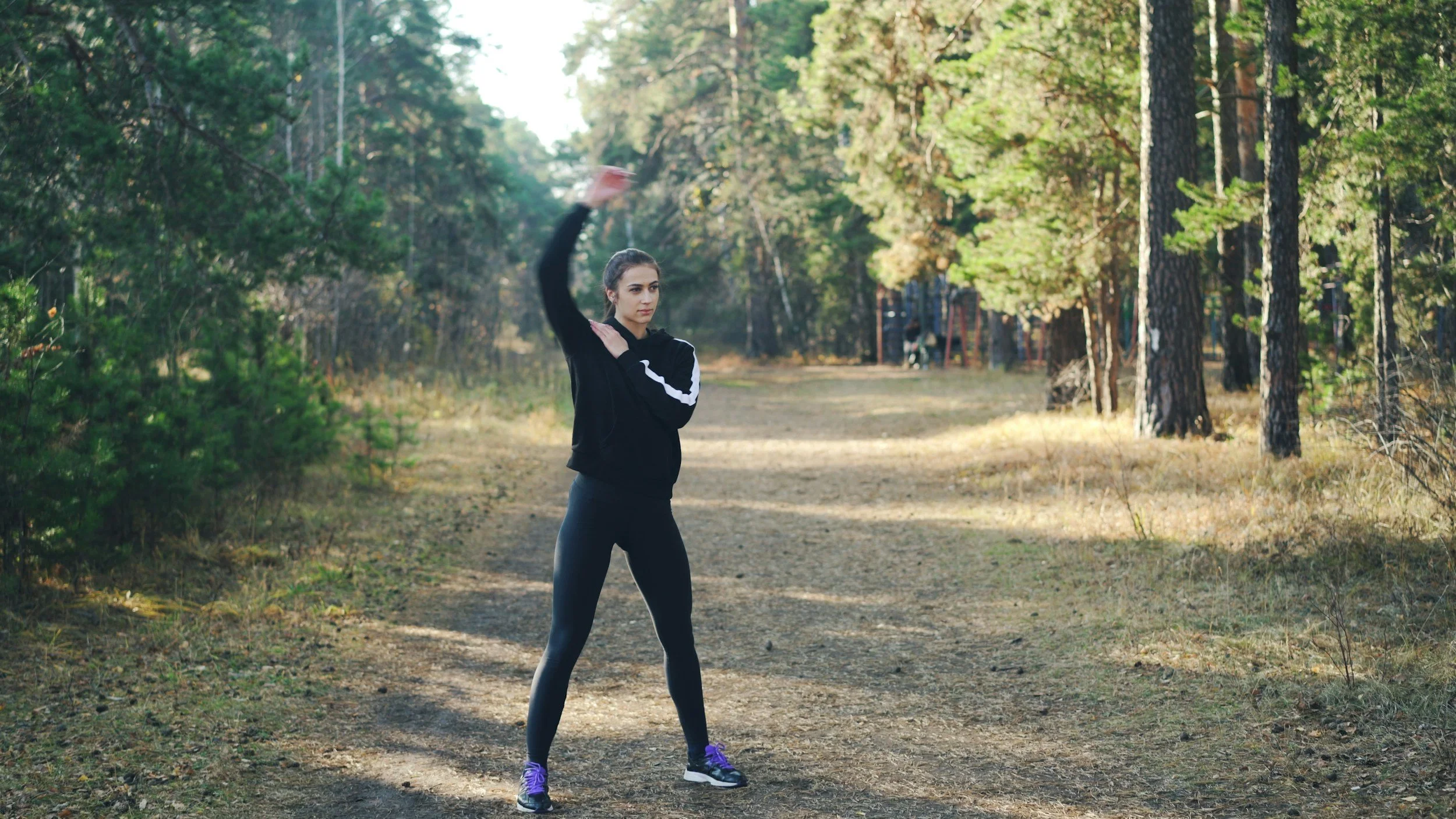
For many, movement triggers not freedom but fear. For them, the simple act of standing up, stretching, or walking across a room can ignite a wave of dread. It’s not laziness or avoidance, it’s a very real experience where the body and brain react as if they are in danger. Living with this fear of movement can be isolating, confusing, and exhausting, and this means it deserves to be spoken about with care and compassion.
I am an Alexander Technique teacher working to overcome a form of kinesiophobia, or fear of movement, which I developed during years of focusing on the trauma healing side of self-development. During this time I worked with my habitual state of increased sympathetic arousal (fight or flight) and many defensive behaviours such as muscle guarding, over-gripping, or compensatory movements. My posture shifted from one of protection from perceived harm to a more open, loose, and unlocked version of me.
Trauma Work
Learning to experience my feelings and embody them cleared up much of the turmoil in my emotional energy, regulating me in many ways, but it also pushed me towards physical immobility. From chronic tension and shutdown, I moved to fatigue and being overwhelmed by everything I had now learned to experience. My muscles no longer reacted with tension (a huge neurological change), but neither did I feel relaxed, uplifted, or well. I went home from my training course in physical pain and tears of deep sadness. For a while I wasn’t able to understand how to integrate experiencing my feelings and physical sensations without developing a pain reaction. I acknowledge here that there is some supportive, but limited, evidence of Alexander Technique working for pain and motor issues, and that more studies are needed.
Although I gained a great deal in many ways and felt confident it was the right path forward for me, I also experienced pain that was difficult to understand or find support for. At the time, there was limited awareness of pain science, connective tissue, and trauma, which made it challenging to encounter teachers with the specific knowledge I later came across. I am glad to have continued my education on the topic ever since. Yet another challenge has been the general lack of empathy that often surrounds pain, as it is not always taken seriously by those around sufferers.
Exercising
After many years of failed attempts to build sustainable exercising habits, and at least two more years of severe fear and panic around exercising, I have now consciously and very gently re-introduced safety for my body. I used to offer safety only for my wounded heart and mind, the body keeping its protective role, just learning to do it in new ways. It is complex but looking back now, I wonder if emotional and physical protective patterns could be explored even deeper together in their indivisible forms.
Taking on a viewpoint I hadn’t come across in trauma-healing communities, I believe a common side effect in those suffering may be a lack of exercise and physical activity. We want to offer so much care and safety to the nervous system that we become afraid of overdoing it in life. I felt threatened by any physical overwhelm, which I only realized later, when I was less reactive and more able to stand back from dramas.
I am sure that sometimes there was an understanding that I failed to pick up on. Other times there was focus on one or the other side, failing to bring the strands together. I hope that my personal deep reliance on protection may help shed some light on why this issue might occur and why we should continue to prioritize healthy exercise alongside non-invasive, gentle methods of body–mind re-education.
Kinesiophobia
When the brain associates movement and physical activity with the source of physical discomfort, kinesiophobia may develop. The whole organism tries to defend itself by immobilizing with pain or fear signals to prevent more agony. Avoidance of a threatening situation is reinforced as it reduces fear, anxiety, and pain—yet fear returns when the avoidance behaviour cannot be performed. In the long term, this causes functional disability as well as depression and misuse, both of which reduce pain tolerance and therefore promote further pain.
The advantageous and pleasant hormones that regular exercise usually produces are absent, so we learn to use movement-avoidance as a pain-avoidance tactic, which quickly results in gradual muscle deconditioning. I only learned about this during the pain science course provided to Alexander Technique teachers after my training. I wish I had been more prepared to notice something like this developing at a time when I dismissed my reluctance as simply making excuses to avoid more pain.
Anxiety and Hypermobility
I cannot be entirely sure, but I suspect the deep neural training of Alexander Technique—without my hypermobility being acknowledged—exaggerated the pain signals. In my case, it wasn’t just a bit of tiredness or staying in my comfort zone out of laziness, but an intolerable sense of everything hurting in my body after a training day. All I could do was sleep. Adding any other physical movement on top of the overwhelm in my system either made it worse or wasn’t even doable. I came to anticipate pain even with simple daily tasks like walking home (I preferred cycling from the train station to the front door), getting groceries (I had to nap first), ironing (it took me days to find the energy), or cycling on sunny weekends (this became increasingly rare).
As I considered myself deep in the self-healing journey, I didn’t acknowledge what was happening to me physically—even though the approach was hands-on and practical. I didn’t even share with any of my teachers about my pain! I simply assumed I was getting better, that this was what the technique was for, and that I needed to focus on handling emotions along the way. Fear and anxiety have been my companions for as long as I can remember. However, only now have I learned how intimately they are related to physical pain, both resulting in similar activation of the sympathetic nervous system. Many studies show how persistent pain is more commonly associated with anxiety disorders than with other psychiatric diagnoses.
Another area of research that has clarified things for me is Hypermobility Spectrum Disorders. Studies affirm that HSD and anxiety disorders share autonomic alterations, higher anxiety sensitivity, abnormal pain perception, and greater somatic sensitivity compared to control groups. Hypermobile individuals with high levels of anxiety traits are more prone to fears and to developing avoidance behaviours. The mechanisms of pain perception* in relation to weak soft tissue are complex, but my body–mind picture began to come together. Understanding of chronic pain—how its development and persistence are caused by altered nervous system function—confirms the possibility of severe pain even in the absence of tissue damage.
I also cannot leave out the aspect of fatigue, which is often acknowledged but reassured to diminish with time as we get more experienced in the practice. Fatigue was recognized but normalized, which I often used as an excuse to withdraw further from life. Yet recent research (2025) shows that fatigue strongly correlates with increased pain interference, avoidance behaviours, and distress in youth with hypermobile Ehlers-Danlos Syndrome. This points to the importance of addressing fatigue directly, especially in pacing and trauma-informed movement practices. Luckily my fatigue is much more under control now that I’ve developed a lifestyle that consists of exciting work, peaceful home and relationships, belonging to a vibrant community and having lots of essential needs met. This is anecdotal, but maybe relatable – I now get surges of energy in my most (emotionally) empowered moments.
Cocooning
In the training course, we recognized that healing from trauma necessitates a period of cocooning, which involves being present and still while the process of change takes place. It is a necessary stage in which there is a stronger need to sleep more and cancel plans, while feeling overwhelmed or heavy. There is a lot to process before recovery, and that takes energy, even if it looks like stillness. Rather than retreat or shutdown, cocooning is like melting from the freeze or feeding the undernourished areas.
I was simply unaware of how my protective behaviours were oversensitizing me during that period. In Alexander language: I was overdoing it, something we see in beginners all the time: trying hard to accomplish the non-doing. I knew very little about my sensitive neurological system and very lax connective tissue. On the contrary, I received praise for “going up so well” and being easy to work with. A visiting graduate student once told me there was nothing to do with me since I was already done and ready. I didn’t share with her the multiple invisible problems I was constantly dealing with. Only now am I aware of something called peripheral sensitization: how trauma, inflammation, or nerve damage can cause changes to nociceptive neurons which result in increased sensitivity to pain.
Deconditioning
Becoming afraid of experiencing symptoms that would always follow physical activity, I fell into an underactivity cycle. I did just a little bit and then stopped because I wanted to avoid flare-ups. I learned to rest “just in case”. Over time, this meant not achieving very much at all, which created more deconditioning and more pain.
The deconditioning means that the body is no longer robust enough to cope with the activities of daily life. There is an energy cost to everything we do—even attempts to overcome fear of movement. Resting is important, but it is clearly a one-sided answer for a healthy life.
You might have heard of the boom-and-bust, or overactivity-and-underactivity, cycle. That is how it works. I wake up feeling good, with energy. Needing to get things done, I keep going until the pain or fatigue kicks in. Then I need to stop and recover. But next time I am a little bit more sensitized, and the pain arrives sooner. The recovery time is also longer. So, I find myself doing less and less because I have slowly been sensitized to pain.
Now the pain is in control. On a good day, I do too much; on a bad day, I do nothing. Periods of rest become longer, which contributes to deconditioning. That, in turn, feeds back into pain.
I started writing this piece while enjoying a Mediterranean holiday of salty seawater and constant heat. I used these pleasant sensations to consciously remind myself of safety and pleasure in natural movement (swimming, walking) and the body’s self-healing powers. Few months onward, having written a diary of my progress, I enjoyed almost no fear and much more trust in my body even in the damp and dark autumn of Estonia. Even though I hadn’t developed an exercising routine yet, I was much more active, achieving more and resting less.
In January I experienced my first landing in the parasympathetic response after a 90-minute winter hike, feeling pleasure and total calm inside the tiredness. By the middle of February there is finally no trace of fear of movement and I am working on getting stronger in small chunks every day.
Learning About Pain
The Alexander Technique is a method to help us find ease in what we do by learning ways of moving more efficiently, building resilience, and developing confidence in our ability to move with ease. For me, the process has not been straightforward—as with hypermobility, for example, letting go of restrictive muscle-guarding patterns left me feeling unsafe in new ways, perpetuating the cycle of fear.
While many practitioners, including myself, find great value in the Alexander Technique’s approach to movement and awareness, it is important to note that clinical evidence supports its benefits primarily for chronic spinal pain and some Parkinson’s symptoms, with limited data elsewhere. More robust studies are needed to clarify its broader applications. Still, I am convinced there is much to explore within this technique.
I think I’ve learned something important through having to understand how my own pain signals, mentality, and trauma-healing systems connect my brain and body. I wish there were broader awareness of these links, and I am grateful for the dedication of the Alexander Technique Science team and the wider Alexander community for continuing to deepen our understanding together.
*The evolution of the symptom complex associated with HSD untreated can be seen as a slowly developing crescendo of painful short-lived soft tissue traumatic incidents, occurring sequentially and building up a momentum of severity, frequency and duration over time. Slow and often incomplete healing of individual lesions results in a blurring of their margins, so that pain transforms from discontinuous to continuous, from recurrent acute to sub-acute and ultimately, to chronic. - „Hypermobility, Fibromyalgia and Chronic Pain“ Edited by Hakim, Keer, Grahame
This article was published in STAT News Feb 2026
References
1. Little, P., Lewith, G., Webley, F., Evans, M., Beattie, A., Middleton, K., . . . Sharp, D. (2008). Randomised controlled trial of Alexander technique lessons, exercise, and massage (ATEAM) for chronic and recurrent back pain. BMJ, 337, a884. doi:10.1136/bmj.a884
2. Bulbena, A., Duro, J. C., Porta, M., Faus, S., Vallescar, R., & Martin-Santos, R. (1993). Anxiety disorders in the joint hypermobility syndrome. Psychiatric Research, 46(1), 59–68. doi:10.1016/0165-1781(93)90008-S
3. Smith, T. O., Easton, V., Bacon, H., Jerman, E., Armon, K., Poland, F., & Macgregor, A. J. (2014). The relationship between benign joint hypermobility syndrome and psychological distress: A systematic review and meta-analysis. Rheumatology, 53(1), 114–122. doi:10.1093/rheumatology/ket317
4. Baeza-Velasco, C., Pailhez, G., Bulbena, A., & Baghdadli, A. (2015). Joint hypermobility and the heritable disorders of connective tissue: Clinical and empirical evidence of links with psychiatry. General Hospital Psychiatry, 37(1), 24–30. doi:10.1016/j.genhosppsych.2014.10.002
5. Simmonds, J. V., & Keer, R. J. (2007). Hypermobility and the hypermobility syndrome. Manual Therapy, 12(4), 298–309. doi:10.1016/j.math.2007.05.009
6. Bishop, F. L., Yardley, L., & Lewith, G. T. (2008). A systematic review of beliefs involved in the use of complementary and alternative medicine. Journal of Health Psychology, 13(7), 915–933. doi:10.1177/1359105308095069