



Coming Up 2027: Hypermobility Online Course
A 7-week online journey toward a supported, stable, and mindful bodymind
What is it?
A Practical Approach to Hypermobility
This is an Alexander Technique online course designed specifically to help you cope with hypermobility, or connective tissue weakness. The course does not offer medical treatment or psychotherapy, but focuses on a practical and mindful approach—developing better body awareness and nervous system regulation.
We’ll learn what actually happens in a hypermobile body and mind, how to find stability and a sense of security, achieve optimal muscle tone without excessive strain, and reduce pain and fatigue in everyday life.
Why?
Many hypermobile people live for years with chronic pain, fatigue, frequent injuries, anxiety, and a poor sense of well-being. Unaware that their symptoms may have a common cause, they are unable to take better care of themselves. They feel that their bodies are unpredictable or “broken”—one day they can do everything, the next day the exhaustion or pain is so severe that even routine activities become difficult. They have often received conflicting advice, and their symptoms have been underestimated or treated as separate issues. Getting a diagnosis is a rather confusing process, and very few primary care physicians know how to guide people toward a diagnosis. Without a diagnosis, however, they lack an understanding of why their bodies and minds behave the way they do, and how to actually improve their well-being, strength, and resilience.
Hypermobility cannot be cured — but it can be successfully managed
“Hypermobility is like The Beauty and The Beast – looking beautiful, but the underlying pain, fatigue, and injury are truly beastly.”
What Would Help?
Understanding what’s really going on for your body and mind
Less pain and more energy
Feeling safe in your own body
Moving without fear or pain
Returning to the activities we love
Trusting yourself
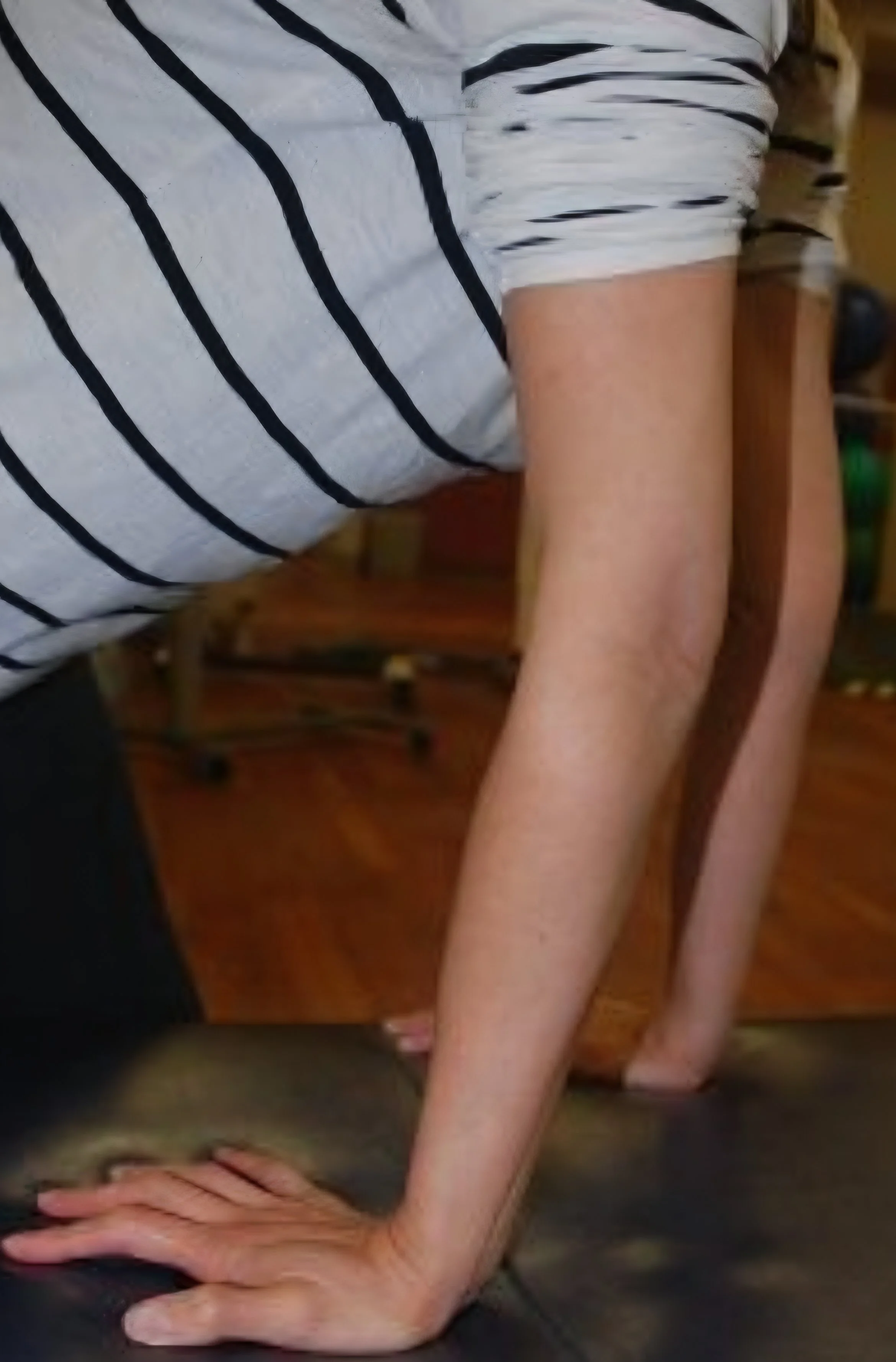
Whether diagnosed or not, connective tissue weakness is a condition that encompasses a fairly broad spectrum. You may recognize yourself in just a few or all of the following symptoms:
✨ Constant tension and fatigue: You feel like your body isn’t supporting you. Even simple activities, like standing in line for a long time or sitting in an office chair, require a tremendous amount of energy because your muscles have to work twice as hard to hold your body together.
✨ Locking your joints and “overcompensating”: When standing, you push your knees back hard until they lock, or you always lean on one hip. When reaching for things, you extend your elbows or fingers farther than is natural, often without even realizing it.
✨Clumsiness and poor spatial awareness: You often bump into door frames, table corners, or cabinet doors because your brain doesn’t accurately perceive where your body is in space.
✨Unexplained pain and unsteadiness: You often experience tension in your neck, shoulders, or lower back that seems to come “out of nowhere.” You feel unsteady when walking on uneven surfaces or trying new physical activities.
✨Intensity and anxiety: You have difficulty regulating your emotions. Because your nervous system is overloaded by constant physical disorientation, everything often feels too intense. You may have noticed connections between hypermobility and conditions such as autism or ADHD.
Why?
Because the people who come to see me are living with pain, fatigue, injuries, and anxiety—conditions that are very often caused by weakness in the connective tissue. They are usually completely unaware that these symptoms might have a common cause. Without recognizing this connection, however, the problems often remain unresolved; people feel insecure in their own bodies and spend years trying to treat their various symptoms separately.
Who?
People with very flexible or “hypermobile” joints
Those who experience recurring injuries or sprains
People with unexplained chronic pain or fatigue
Those who feel that physical exertion affects them more than others
Those who have been searching for answers for years but haven’t received a comprehensive explanation
What?
Hypermobility isn’t just about flexible joints. It can affect the entire body: joint stability, muscle function, the nervous system, energy levels, recovery, and emotional well-being. Living with unrecognized hypermobility can lead to chronic pain, frequent injuries, fatigue, anxiety, and the feeling that your body isn’t functioning the way it should.
So is it dangerous?
Hypermobility isn’t dangerous. Many people live their entire lives without even realizing they have it and without having to limit their activities. It’s simply a physical trait that can be either a strength or a risk factor, depending on how controlled your movements are and what kind of stress your joints are under.
Problems tend to arise when:
joint mobility is not balanced by muscle strength and control,
the load is heavy, repetitive, or monotonous,
a person frequently assumes extreme positions without actually being able to control them.

This course will help you:
Understand what hypermobility is and how it affects the entire body
Identify the connections between symptoms and hypermobility
Learn to rebuild trust in your body
Develop stability, strength, and body awareness
Support the nervous system and reduce stress
Make informed choices that help reduce pain, improve energy levels, and prevent injuries
Before you join my courses, I’ll have a short, free introductory call with each person so we can discuss your situation and see if the program I’ve created is a good fit for you. I’ll give you a more detailed overview of the course so you can make your decision with confidence. Email me to schedule an introductory call!
A little bit about me
How do I personally relate to hypermobility today?
Strange sensations, signals, and cries from my body and mind are still a regular part of my everyday life. Most of the time, I feel small, constant movements between my bones in the soles of my feet, my knees, my lower back, and the back of my neck. It’s no longer painful, but it requires constant presence and effortless awareness. Minor stressors often still feel overwhelming, but I’ve learned to give myself a break—several times a week—to prevent my organism from overheating. I may still feel intense fear and anxiety, but I have more space, empathy, and resilience for these feelings. My nervous system overheats within a couple of hours, not a couple of months or years, but all the more reason I consciously maintain daily balance, stability, and alignment—and in doing so, I’ve avoided major burnouts.
Today, I can walk without my elbows and shoulders aching. I can play the violin again without feeling discomfort in my left shoulder and knees. I can stand at a party for longer without my legs burning from fatigue. I can stand while traveling and on public transportation without immediately looking for a seat. I happily carry a backpack and do gardening without pain. I go to the gym without fear, feeling a pleasant sense of fatigue and strength in my muscles both during and after the workout. When my needs are met, I feel the deepest sense of satisfaction and happiness. When my needs are unmet, I recognize this and take steps to fulfill them.
✨I practice the Alexander Technique and Nonviolent Communication every day, which help me stay in touch with myself, create inner stillness and peace, and meet my needs. Movement, distributing my load, and taking breaks support the foundation of my well-being through strength and stability.
✨Today, I clearly express my needs and desires so that others can more easily take me into account and so that everyone around me can feel good.
✨I do feel sensitive, but I enjoy the deep peace and joy that this very sensitivity allows me to experience. I feel a deep connection and closeness to people when there is care, authenticity, and presence in the room. I surround myself with meaningful relationships and feel the full joy of life.
It turns out that my unique connective tissue gives me a sort of superpower when it comes to dealing with problems—my high sensitivity and capacity for empathy help me stay truly in touch with myself, set boundaries, maintain balance, and form deep connections with others. Life is actually more balanced and richer precisely because my commitment to my own well-being—even when I’m feeling down—has created real value in my daily life over the years.
“I now have many days when I can wake up without pain or fatigue, move with confidence, lead an active lifestyle, and feel that hypermobility is my ally, not an obstacle.”
Before the Course Begins
The course structure effectively reflects both the educational philosophy of the Alexander Technique and the contemporary approach to recovery from chronic pain and symptoms of hypermobility. The topics are interconnected so that the course progresses logically: understanding → sense of security → body awareness → movement → emotions → independence. The practice and principles of the Alexander Technique run throughout the entire course. The emphasis is not on “fixing” symptoms, but on getting to know oneself as a whole and developing new skills.
Before the course begins, participants will complete:
The Hypermobility Questionnaire (diagnosis or 5 screening questions)
The Self-Assessment Questionnaire
The initial assessment for the Movement and Symptom Diary
P.S. You’ll receive all theory topics in short chapters via email each week, two days before the session.
7-Week Course Programme✨️
How? The course is structured as a 7-week journey, with each module building on the previous one and guiding participants step by step towards a more supported and stable body-mind:
Introduction: Understanding the hypermobile body-mind and experiencing a “supported body & mind” for the first time.
Safety: Calming the nervous system, working with gravity, and teaching the body how to rest.
Body Awareness: Learning where the body actually is in space, transforming the entire experience of movement, which affects overall wellbeing.
Muscle Tone: Letting go of joint locking and finding the body’s supportive “centre” without excessive effort.
Range of Motion: Recognising excessive stretching and stopping movement before the body’s protective response kicks in.
Pain and Fatigue: Reducing physical load through pacing, effective breathing and better distribution of effort throughout the body.
Everyday Life: Integrating what you have learned into everyday activities – sitting, moving, and working.
Read More:
If you recognize yourself in these descriptions but haven’t been diagnosed, the first step is to educate yourself on the topic. If what you’ve read here leaves you feeling confused, please write to me, and we can discuss your specific questions in more detail.
Although hypermobility has always existed, it has become particularly symptomatic due to the sedentary lifestyle, lack of physical activity, and emotional stress of the 21st century. A diagnosis can be both helpful and limiting. I am deliberately choosing to use the general term “hypermobility” to raise initial awareness for all soft tissue weakness related disorders.